Tuesday, March 15, 2011

Basic Principles of Economics.

The ten basic principles of Economics are as follows. First four of these are related to individuals, next three are related to producers and last three to the governments:


1. People Face Trade Offs
2. The Cost of something is what you give up to get it.
3. Rational people think at the margin
4. People respond to the incentives
5. Trade can make everyone better off
6. Markets are usually a good way to organize economic activity
7. Governments can sometimes improve market outcomes
8. A country’s Standard of living depends on its ability to Produce Goods and Sevices
9. Prices Rise when the Government Prints too much Money
10. Society Faces a Short run Trade off between inflation and unemployment.

Other Related Posts :

Factors of Production

Determinants-of-Supply

Ttoday's Dynamic Work Place


Friday, March 4, 2011

Redefining Strategy Through Logo

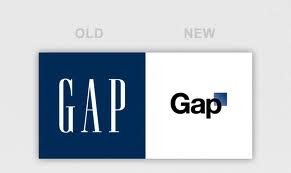
The consumers or brand fans most of the time accept change of logo as a mark of change, yet sometimes they fail to react positively. Result – like GAP, the brand has to resurrect the old logo. PepsiCo's Tropicana re-branding expedition had also met with a similar fate.

The reaction and involvement of brand followers of GAP on internet through face book and twitter opened a new avenue to involve consumers in the brand. Airtel tried this by inviting them to name the logo like Nike's Swoosh and Michelin's Bibendum.

The logo is the first identity that comes across the consumers. It is the face of the company. Hence, rebranding it has its own dangers. Still, the marketers have to do it some times. The reasons can be:

1. A need to inject vitality and youthfulness in to the brand (the colour in the Godrej logo).
2. Make it contemporary and more importantly connectable (Café Coffee Day's dialogue box logo);
3. Diversification and brand extensions (Starbucks removed the word coffee from its logo),
4. Expansions into new geographies (Airtel, Mahindra & Mahindra),
5. A change in the strategy of company.(Dell, American Express and Arvind)
6. Ventures in to new businesses (Videocon) and
7. In some cases re-branding happens when companies' try to draw attention.

The iconic Apple logo didn't always have bite. The first logo depicted Sir Isaac Newton under an apple tree. The changed identity may not find immediate acceptance by all. If it is well thought off and connect connects with the consumers then it becomes an integral part, like the current logo of Apple.

According to Young Kim, creative director, Siegel+Gale, "Re-branding is not just about changing a logo. It has to be strategic." Re-branding fails if enough time has not been spent on planning and communicating the reason for the change, both internally and externally.

Some companies use a rebranding exercise as a catalyst to refresh their manifesto, recharge their employees and boost trade sentiments. Such initiatives unless supported by deeper intent which has to be long-term impact on product, promise and experience — would come through as superficial changes which do not have any enduring values.

Indian companies see the logo as a quick fix. They want to be more contemporary, cooler and youthful. But they do not go through real transformation to change the culture and align the organisation to support what the logo is meant to convey.

A logo is the ultimate and most visible manifestation of a brand, the picture that is supposed to say a thousand words, and evoke a thousand conversations conducive for the brand's existence, acceptance and growth.

The logo is an influential branding instrument and can turn on a range of human emotions. But a logo change is certainly no more a private affair, it needs a lot of research.

First, correctly estimate the equity in a pre-existing logo, and sometimes go as far as looking at the different parts of the identity in isolation and decide which parts still have relevance and which do not.

Understanding and developing a logo is both art and Science.

• The art of a logo is about the personality reflected through iconology, colour, fonts, shapes spaces within. The art is in the feeling and emotion and surprise associated with a mark.

• The science is about reflecting facts, logic & messaging. The science behind the development of a logo is part research — the mark needed to create an impact and also part design, to shape an idea in a distinctive way.

Both have to work in tandem — and in sync to work for the brand. It can be as simple as a unique colour, type treatment, or even a symbol. But this must be applied in context with the audience's culture.

The two successful transformations have been of the Café Coffee Day and British Petroleum (BP). Café Coffee Day changed its logo to an open dialogue box to position itself to a social hub. British Petroleum (BP) for example understood that using the colours of green and yellow would signal environmental sustainability and help change the perception of the company.

The colour of the logo plays an important part both in its appeal and communication. Each colour has its own significance.

1. Yellow and black is the most readable (scientifically proven) combination — highway signs are done in this combination mostly.

2. Blue is vast, calming, and relaxing and is known to create a connect with expertise, precision, technology and efficacy, hence brands in blue are likely to become believable quickly.

3. Pink and orange evoke certain taste-buds and are generally great for creating a multi-sensorial experience just through colour.

Old Airtel Logo
4. Red colour is supposed to be exciting, aggressive, and passionate and therefore evokes a subconscious emotional response from the viewer. Red stimulates and engages the most.

The colours keep changing as brands and markets evolve. So when the over 110 years old brand Godrej decides to add vigour to itself, they kept the logo intact and added colour — Green for Harmony, Blue for the imagination and technology and Ruby for Passion and Dynamism.

But as far as branding is concerned the king of all colours is Red. A brand in red has the advantage of being noticed and registered in the minds of receivers. But, if the brand fails to create distinction in form or shape (or typography), it would get lost in the red ocean. Red needs black or white to contain it and create distinction.

Other Related Posts

Total Marketing Orientation

Functions of Chief Marketing Officer

Todays Dynamic Work Place


Saturday, February 19, 2011

Factors of Production & Entrepreneurship

Que : Which are the factors of Production?

Ans : Economists have long recognized the four distinct factors that people use to create the things they want.

The Four "factors of production” in Economics are :
i. Land,
ii. Labour,
iii. capital and

Each factor plays a unique role in the production of goods, and each factor is clearly distinguishable from the others.

Land is the passive factor in production.

Labour uses capital on land to produce wealth.

The tangible goods produced by labour, which satisfy human desires and have exchange value is called Wealth.

When labour satisfy desires directly, without providing a material good, we call that "Services".

Thus labour provides the economy with "goods and services".

The process of co-ordinating Land, Labour and Capital for production is known as entreprenuership. The person who takes this ativity is called enterprenuer.

Which are the determinants of Supply

The main six determinants of supply are :

1. Prices of different goods including substitutes
2. Number of suppliers
3. Production function and technology
4. Prices of different inputs including wage rates, interest.
5. Producers' future expectations
6. Government Policies, Duties and Taxes

Other Related Posts  :

Basic Principles of Economics

Factors of Production


Friday, November 12, 2010

MIS Case Study DATABASES BEHIND MYSPACE

Site: http://myspace.com/

Case Summary :

Myspace became the most popular social networking site in the United States in June 2006.[8] According to comScore, Myspace was overtaken internationally by its main competitor, Facebook, in April 2008, based on monthly unique visitors. This growth and failure to sustain the leadership are the lessons for managers to follow.

The CHALLENGE to MySpace 

MySpace.com was one of the fastest growing site on the Internet with 176 million MEMBER ACCOUNTS in May 2007 and 260,000 new users registering each day. Often criticized for poor performance, MySpace has had to tackle scalability issues few other sites have faced.

How did they do it?


When growth spruts so fast and un-anticipated for any business then the challenge is tough. In such a scenario the plans fail so frequently that management starts feeling that no planning is better. But that myth calls for the down fall.

Comparison Table of MySpace with News Other Sites

Initial Architecture of MySpace :


In the initial phase they adopted two web server architecture and


  • Data base server
  • MS SQL Server


This was suitable for small to medium sites for simplicity. As the members grew shartfalls in the initial setup start getting visible. MySpace team tried to attend and resolve them to a certain level.


The Problems & Resolution


Prob.1. : Database servers reached their I/O limits when MySpace reached 2 million accounts.


Effect was site lag behind in Content update


Solution Attempetd : MySpace switched to vertical partitioning model where separate database supported distinct functions like –

  • The Myspace.com Handbook: The Complete Guide for Members and ParentsLog-in Screens
  • User Profile 
  • Blogs

Problems-2  : When MySpace reached 3 million accounts some functions grew very large.


Effect was one database server proved insufficient

Resolution  : Requirement was scale up strategy. MySpace added many cheaper servers to share the database workload. And Distributed Architecture.


Data of 1 million accounts per separate instance of SQL server.


Problem.3 : Grwoth in accounts led to performance issues and waiting time increased drastically.


Resolution -In 2005 added layer of servers between database servers and web servers. This reduced load on database server.

Problem.4 :When MySpace Crossed 25 million accounts Effect was seen on the performance and I/O speeds

Resolution -Moved to 64-bit SQL server to work around their memory bottleneck issues. Their standard database server configuration uses 64 GB of RAM.


Failure isolation. Segment requests into web server by database. Allow only 7 threads per database. So if the database is slow only those threads will slowdown and the traffic in the other threads will flow.

Further Task for Developers
MySpace still faces overloads more frequently than other sites.
Login errors occurs at 20 to 40%.


Site activity continues to challenge the technology. Developers continue to redesign Database Software and Storage System. Task is never ending


Conclusion : 
Since the beginning, MySpace.com has operated in ad-hoc fire-fighting mode, evolving its architecture to oil whatever new squeaks presented themselves. MySpace.com continues to experience significant performance and reliability problems, but they’ve never been showstoppers. Lack of long term planning by the MySpace team gets reflected in the case and this has costed them the loss of leadership advantage. Face Book, Twitter and You Tube with similar business model have marched ahead.


Other Posts :


Handling Multinational market on web by Nokia


Loreal collaboration through MS Share Point


Mode and media for Communication.

Demand Paging

Thursday, October 21, 2010

Case Study Level 5 Leadership

The Idea in Brief Level 5 Leadership


Renowned management researcher Jim Collins studied 1,435 Fortune 500 companies and found that only 11 achieved and sustained greatness garnering stock returns at least three times the market’s for 15 years after a major transition period.

What did these 11 companies have in common? Each had a “Level 5” leader at the helm.

Ingredient for Level 5 Leadership

Level 5 leaders blend the paradoxical combination of deep personal humility with intense professional will. This rare combination also defies our assumptions about what makes a great leader.

Celebrities like Lee Lacocca may make headlines. But mild-mannered, steely leaders like Darwin Smith of Kimberly Clark boost their companies to greatness and keep them there.

Who are they?

Lido Anthony "Lee" Iacocca is an American businessman known for his revival of the Chrysler Corporation in the 1980s. He was CEO from 1978 till 1992

Darwin Smith – CEO at paper products maker Kimberly Clark from 1971 to 1991. Shy, awkward, shunning attention, but he also showed iron will, determinedly redefining the firm’s core business despite wall streets skepticism.

The formerly lackluster Kimberly Clark became the worldwide leader in its industry, generating stock returns 4.1 times greater than the general market’s.

Rule – 1 First who, Then What

Level 5 leaders instead of promoting their own visions, they get their best people together and grill them with penetrating questions to draw new strategies out of them.

Because Chief Executives can't decide what to do alone, they need the input of a team of smart associates.

They get the best "who" into a room and together decide the best "what." This makes them participative leaders.

Rule – 2 Confront the Brutal Facts - Sense the Change in surrounding

Four-step process adopted by level 5 Leaders to promote awareness of emerging trends and potential problems:

1) Lead with questions, not answers;

2) Engage in dialogue and debate, not coercion;

3) Conduct autopsies without blame; and

4) Build red flag mechanisms that turn information into information that cannot be ignored.

E.g. Kroger (Success in grocery Ind),

A&P (Failed to transform)

Rule – 3 The Hedgehog Concept - Simplicity Within the Three Circles

The way to make the transformation from Good to Great is often not doing many things well, but instead, doing one thing better than anyone else in the world.

Three criteria of Hedgehog Concept :

Determine what you can be best in the world at and what you cannot be best in the world at;

Determine what drives your economic engine; and

Determine what you are deeply passionate about.

E.g. Reliance Ind - Integrated Approach

Mafatlal Ind - Unrelated Diversification

Rule – 4 Culture of Discipline

Level 5 companies display three forms of discipline:
 

Rule – 5 Technology Accelerators

Technology should not be regarded as a potential panacea for all that ails a company.

Level 5 Leaders tend to apply technology in a manner that is reflective of their "hedgehog concepts" -- typically by selecting and focusing solely upon the development of a few technologies that are fundamentally compatible with their established strengths and objectives.

The ideal approach to technology is characterized by following cycle:

"Pause -- Think -- Crawl -- Walk -- Run."

Rule – 6 The flywheel and the Doom Loop

Two cycles that demonstrate the way that business decisions tend to accumulate incrementally in either an advantageous or a disadvantageous manner are :

1. Fly wheel

Positive momentum is created when decision to reinforce company’s competencies are executed. This energizes investment and loyalty of the staff.

2. Doom Loop

An over extension into too many diverse areas of concentration. This leads to short lived trends, frequent changes in leadership and personnel, loss of moral and disappointing results.

Apply the Flywheel and not the Doom Loops

Rule – 7 Not the Level 5 Leaders Alone

For sustaining in the long run besides level 5 leader Company should have :

A set of core values in order to achieve the kind of long-term, sustainable success that may lead to greatness

A higher purpose than mere profit generation in order to transcend the category of merely good.

Disciplined People :
When you have disciplined people, you don't need hierarchy.

Disciplined Thought
When you have disciplined thought, you don't need bureaucracy.

Disciplined Action.
When you have disciplined action, you don't need excessive controls.

When you combine a culture of discipline with an ethic of entrepreneurship, you get the magical alchemy of great performance.
In Indian context Premier & Ambassador car makers did not feel and changed themselves and knocked out of the race whereas, Bajaj Scooter chnaged itself and survived.
In Indian context Ratan Tata can be one of the examples of level 5 leadership.

Wednesday, September 22, 2010

Handling the Multinational Market on Web - A Case Study of NOKIA MOBILE

Issues in making Website for a Multinational Companies :


A successful Web site presents information to the user in a format with which he or she is accustomed. It is a big challenge to build a Web site capable of addressing the information needs of racially, ethnically, and linguistically diverse populations.


In today's global marketplace, where companies market their products and services in different country markets, it is important for managers to know how to address customers in diverse cultures. One way to address these diverse cultures is to establish storefronts or company websites which are culturally sensitive and to respond to an increasing demand for national websites which are country specific.


The following points are required to be followed while designing the website for a multinational company:


1. The content parity from one to the other website


2. Cultural sensitivity of the nation.


3. Balance of Values of the company and the nation.


4. Legal Frame work of the country.


5. Language Jargon to fit the national culture.


6. Ease of navigation from one site to the parent site and vice versa.

Objective :


The following study is an attempt to uncover how culturally sensitive multinational companies address these challenges in their national websites by observing different websites of nokia, a Finland based company.


Background of Nokia :


Nokia Corporation is a Finnish multinational communications corporation that is headquartered in Keilaniemi, Espoo, a city neighbouring Finland's capital Helsinki.


Nokia's history starts in 1865 when mining engineer Fredrik Idestam established a groundwood pulp mill on the banks of the Tammerkoski in southwestern Finland, and started manufacturing paper. In 1868, Idestam built a second mill near the town of Nokia. The name of the town, Nokia, originated from the river which flowed through the town. Literal meaning of Nokia is small.

Throughout the nineteenth century to late twentieth century Nokia had its business in electric cable, rubber boots, tires, toilet paper and radio telephony utilities. By the 1980s, Nokia was close to bankruptcy due to the collapse of the Soviet Union which was Finland’s main trading partner. In 1992 Jorma Ollila became the President and CEO and decided to venture out of all its other business and concentrate only on mobile business.
Today, Nokia is engaged in the manufacturing of mobile devices and in converging Internet and communications industries, with over 123,000 employees in 120 countries, sales in more than 150 countries and global annual revenue of EUR 41 billion (Rs.2,48,050 Cr.) and operating profit of €1.2 billion (Rs.72,600 Cr.) as of 2009. It is the world's largest manufacturer of mobile telephones: its global device market share was about 33% in Q2 2010.


Nokia is a public limited liability company listed on the Helsinki, Frankfurt, and New York stock exchanges. Nokia plays a very large role in the economy of Finland; it is by far the largest Finnish company, accounting for about a third of the market capitalization of the Helsinki Stock Exchange.


There are many competing mobile phone companies in the market and more and more new entrants everyday. Nokia is one of the leading companies in the mobile phone industry and has more than 30 market segments in different countries around the world.

Methodology :


To compare the Nokia’s market line in different countries different websites in four different countries and the main corporate website were observed: Nokia United Kingdom, Nokia India, Nokia Middle East and Nokia Finland the differences were analysed for layout and content.

1. http://www.nokia.fi/  is the site for the Finland.


2. http://www.nokia.co.uk/  is for the United Kingdom


3. http://www.nokia.co.in/  is for India


4. http://www.nokia.com/  is the main corporate site


5. http://www.mea.nokia.com/  is for the middle east countries and Africa


OBSERVATIONS :


First point worth mentioning is the difference in languages for the various websites of different countries. Observing this we see the localization necessary so that the local people can absorb the content and feel ease to navigate.


To succeed in different markets, knowing people's tastes and habits are very important. For example the Nokia N8 is offered in UK and Finland but is not offered in India and Middle East.


In those countries instead of N8 model Nokia C3 is offered as an excellent tool to remain in touch via multiple email account and twitter all accessible through Nokia C3.


Nokia N8 is yet to be launched and the UK site offers pre-order facility at Streling pound 429 (Rs 30,588). This smart phone will be loaded with new Symbian^3 OS and is being promoted to compete the recent launches of Apple and Samsung in the British market.


The features ofNokia C3 are user friendly home screen with changing the background, theme and icons. Get shortcuts for live Facebook and Twitter feeds right on the home screen and many other dedicated widgets for communication and multimedia. The sites do not mention the offer price of the product in India or Africa. However, this product on .UK is offered at Sterling Pound 109 (Rs 7,772)


Indian Site :


In the home page the main banner is of Nokia C3. On the bottom side there are tabs displaying the three recent products of the company viewed and navigates to the comparison of theirs with Nokia C3


The main banner back ground is light Grey coloured with multiple bright colour decoration effect to signify the trendy looks of C3.


About Nokia page is simple with four sub categories :
  • Careers
  • Community
  • Press
  • Environment
On the right hand column is a link to latest Press release. The press release co-relates Nokia with most popular game in the continent – Cricket and IPL. However, they are about six months old. No recent updates.


On the page of Find Product , the Banner has models representing Europe and India that signifies the association of company to these countries. The drop down list gives selection of activity preference.The page also has feature to compare the various mobile model.


Community page talks of the core values respected by Nokia towards employees, customers and social community in different countries.


Contact opens a new window where Nokia Head Office address is given and link to regional head offices is provided. There is also a link to get feedback on the website errors from the visitors.


Middle East and African Site :


For African continent and the middle east countries there is a common site - www.mea.nokia.com


There are three language options : English, French and Arabic The content in all the three languages is same..


Under the Support tab there is a online support feature for various devices and software services. Select the model and it takes to the online user manual of the product.


This site like Indian version does not offer online shopping.


Finland Site :


http://www.nokia.fi/  is the site for the Finland audience. The language is Finish. The navigation bar is green coloured and shades of green to highlight the selection of tabs. This site like UK site has online purchase facility.


The main banner displays N8 model with the option to buy online @ the rate 499 Euro (Rs 30,190). Other models offered are Nokia E5 @ 279 Euro (Rs 16,880), Nokia N900 @ 489 Euro (Rs 29,585) and Nokia X2 @ 129 Euro (Rs 7,805)


There is a tab to select the mobile model best suited for the specific work profile and the related accessories. It also displays online discount offers. Nokia N90C is offered at Euro 489 (Rs 29,585) against the original price of Euro 549 (Rs 33,215). Nokia 3120 and Nokia 5800 model are also on discount sale.


Corporate Site :


http://www.nokia.com/  is the corporate site of the company. It provides information about the company, history, activities, management, technology etc.


The company information is subdivided into three parts


  1. Strategy
  2. Management and
  3. Story of Nokia.
The corporate Responsibility page has main Dynamic Banner giving lead navigation to Video of Employee experiences.


Career Page informs about the Nokia Values as the foundation for an evolving culture and basis of their operational mode.


A tab with drop down menu is there to select the country to which aspirant candidate wishes to apply. This drop down menu has list of six countries. If US is selected it takes to the HR page of http://www.nokiausa.com/ 


The Home page has a link to select the national site in which the visitor is interested. If he/ she wants to navigate to a particular national site through the corporate site a check box needs to be selected and then site remembers the computer IP for future.
Conclusion :


The websites content is grouped with sensitivity and the background banners represent the link to the location. The websites also adapted sales approaches to national cultures in order to communicate effectively with visitors to the websites.


The main pages are designed in a similar format with some variations in the layout. A visitor can understand the websites info and review the product line.


The observation of these sites show that company is culturally sensitive in their website design, specifically with regard to use of the national / communication language of that country and the buying habits of the customers. In the countries like India and Middle East where people prefer to buy over the counter the company has not given option of the online purchase, which is there in European sites